Know exactly where
your food sleeps
tonight.
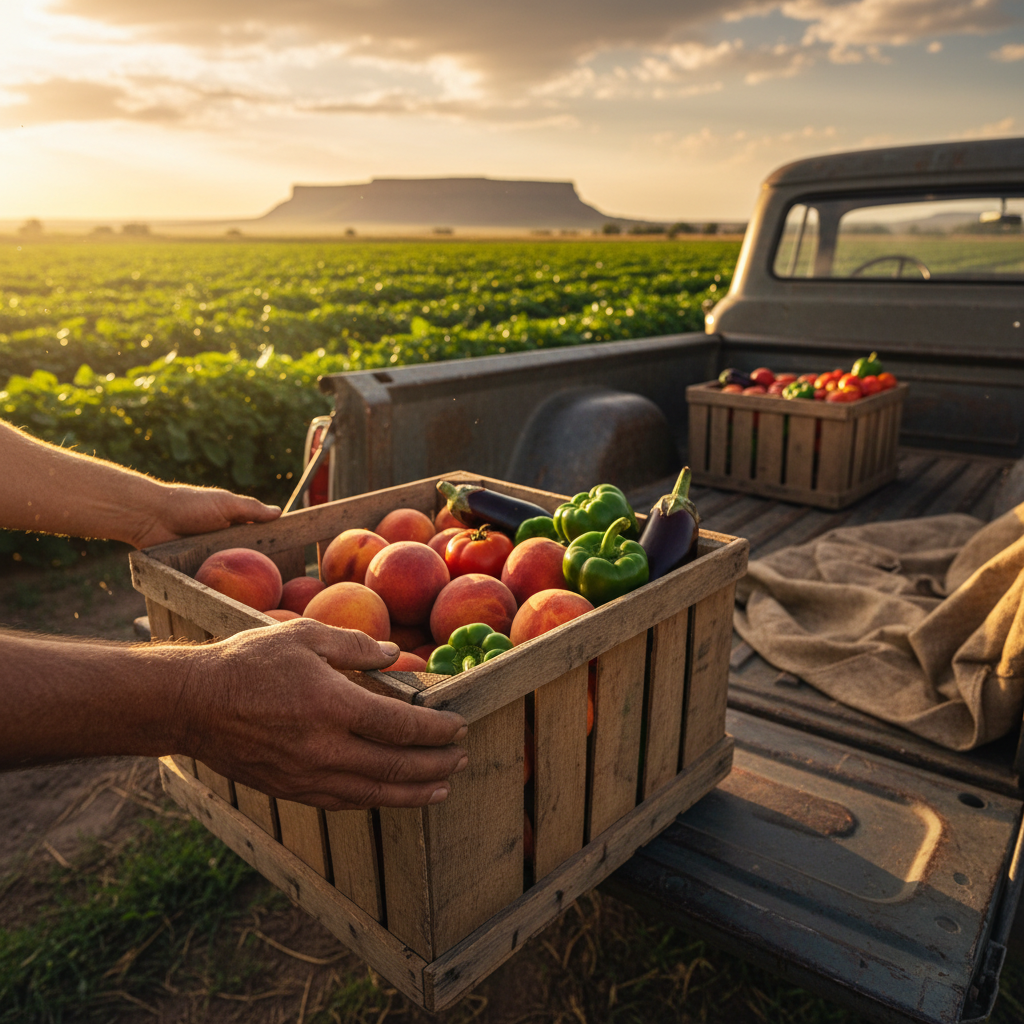
Every Tuesday, a wooden crate. Whatever the soil decided to give that week — knotted carrots, dirt-dusted beets, tomatoes still warm from the vine.
From your doorstep
back to the seed.
Scroll backward through time. Every layer of how your food gets from the ground to your kitchen.
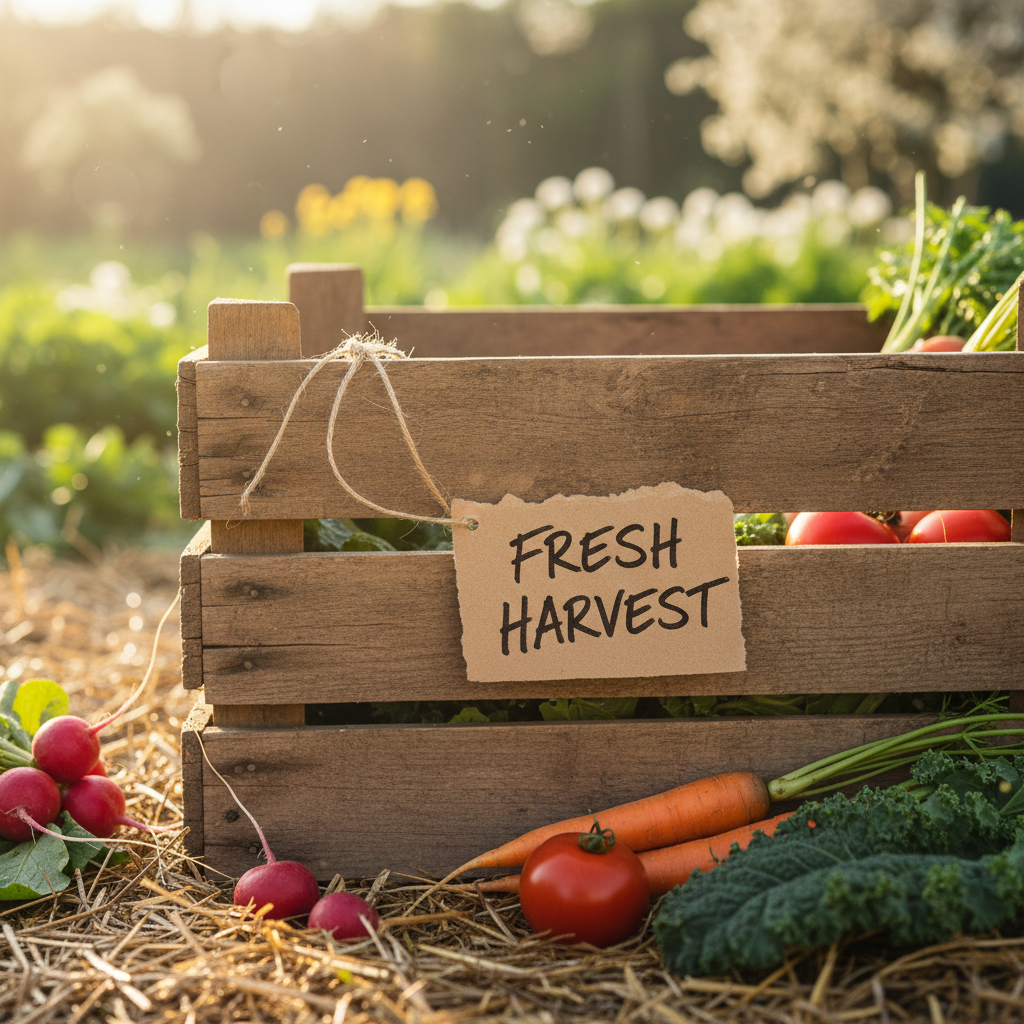
A crate with your name on it.
Marker on masking tape. Sometimes the ink smears. We leave it on the porch or the tailgate at the drop point you chose when you joined. The crate comes back next week — we reuse them until the slats give out.
“Feb 25 — 47 crates out. Ran short on beet bunches; substituted extra fennel from the east bed. Left a note in each affected crate.”
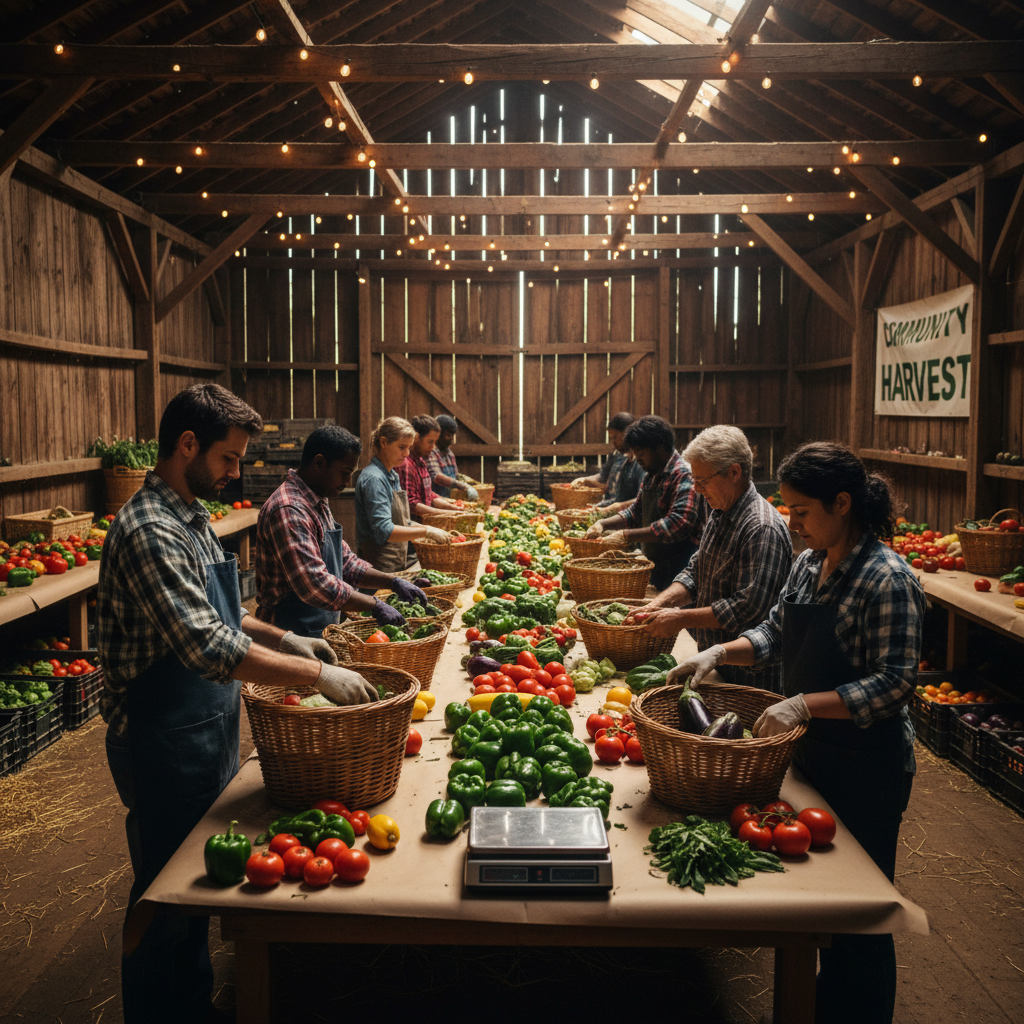
Volunteers, scales, and the smell of damp earth.
Eight to twelve members show up every Monday to sort, weigh, and pack. Nobody is paid. There's a radio, a folding table, and a whiteboard with that week's contents. Shares are weighed to within two ounces of their target weight.
“Feb 24 — Packing night. Maria and her daughter came for the third week running. We went through 340 lbs of produce in under two hours. The tomatoes were exceptional.”
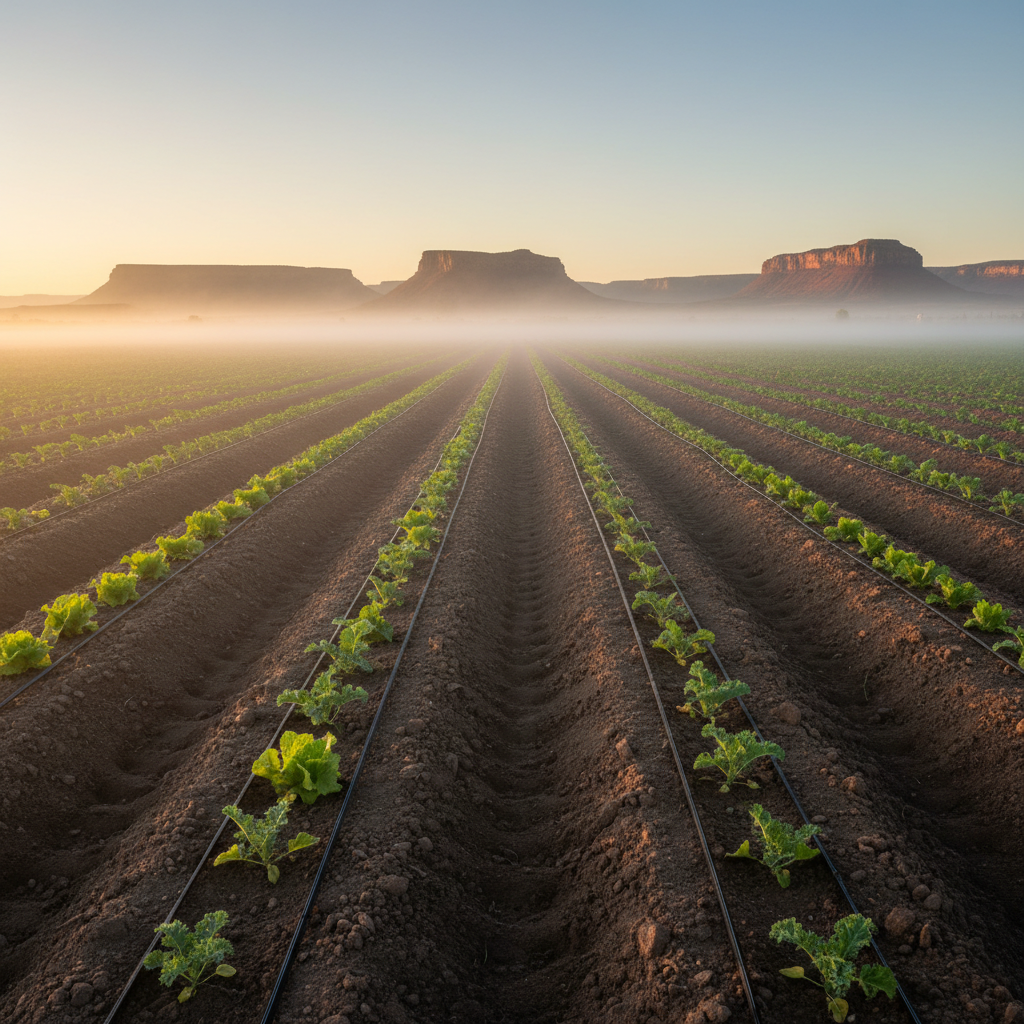
Water before the heat takes it.
Drip lines run under every bed. We irrigate at first light so roots drink before the afternoon sun. The schedule changes week to week based on soil moisture readings — we log every reading in a green notebook that lives on the tractor seat.
“Feb 18 — Soil moisture at 34% in the tomato beds. Held irrigation. Wind from the west, low humidity. Checked the squash for powdery mildew — clean so far.”
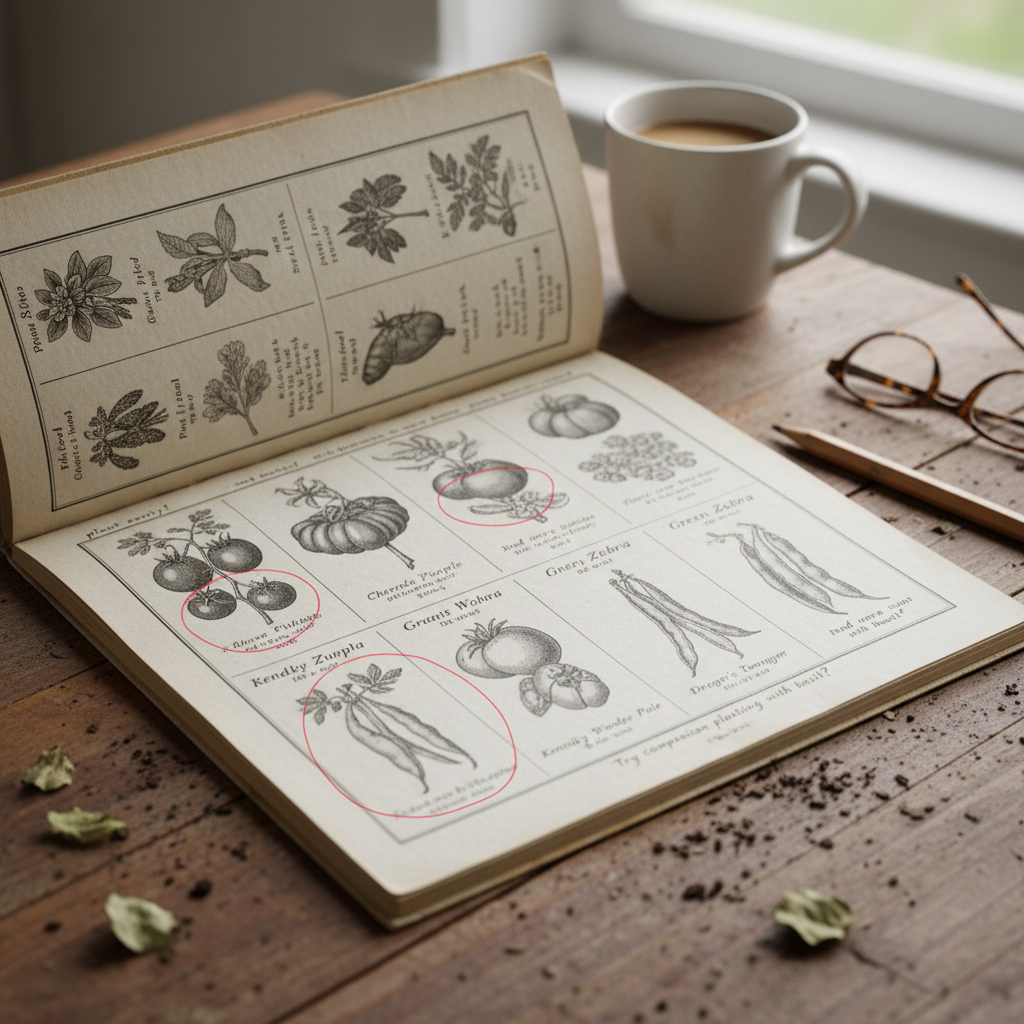
Hand-circled in a paper catalog.
In January we sit at the kitchen table with three seed catalogs and a pencil. We choose varieties for flavor, not shelf life. Brandywine tomatoes bruise in transit — we grow them anyway. Costata Romanesco zucchini takes twice as long to mature — worth every day.
“Jan 9 — Ordered from Baker Creek and Fedco. Circled the Mortgage Lifter tomato again. Trying the Dragon Tongue bean for the first time this year. Total seed spend: $312.”
The notebook on
the tractor seat.
Trust isn't argued. It's shown, week by week, row by row.
First fennel of the season
The Bronze fennel came up overnight, it seems. Fronds still furled tight. We'll let it run another week before cutting. Meanwhile the Chioggia beets are at their sweetest — the cold snaps have been helping with that.
Soil amendment day
Turned in 4 yards of compost across the tomato beds. pH sitting at 6.4 — right where we want it. Added a light dressing of kelp meal to the pepper rows. The garlic we planted in October is coming up strong in row 7.
Seed order arrived
Three flat-rate boxes from Baker Creek and one from Fedco. Sorted and labeled everything into the seed cabinet by planting date. The Dragon Tongue beans are new this year — yellow with purple streaks. Members are going to love them.
Cover crop turning
Turned under the winter rye in the main field. The roots had really knit the soil together — took two passes with the tractor. Left the crimson clover in the east beds; it's still fixing nitrogen. We'll turn that in March.
Year-end: what worked
Brandywine tomatoes: best season yet. Mortgage Lifter: inconsistent but worth keeping. The Padron peppers sold out at the farm stand every week. Costata Romanesco zucchini: members loved it, we're doubling the planting in 2026.
The full log goes back to March 2018 — the first asparagus crowns breaking surface.
People who've walked
the rows.
The first week I got a variety of tomato I'd never heard of. I looked it up, found one recipe, and it was the best thing I cooked all summer. That's the whole point.
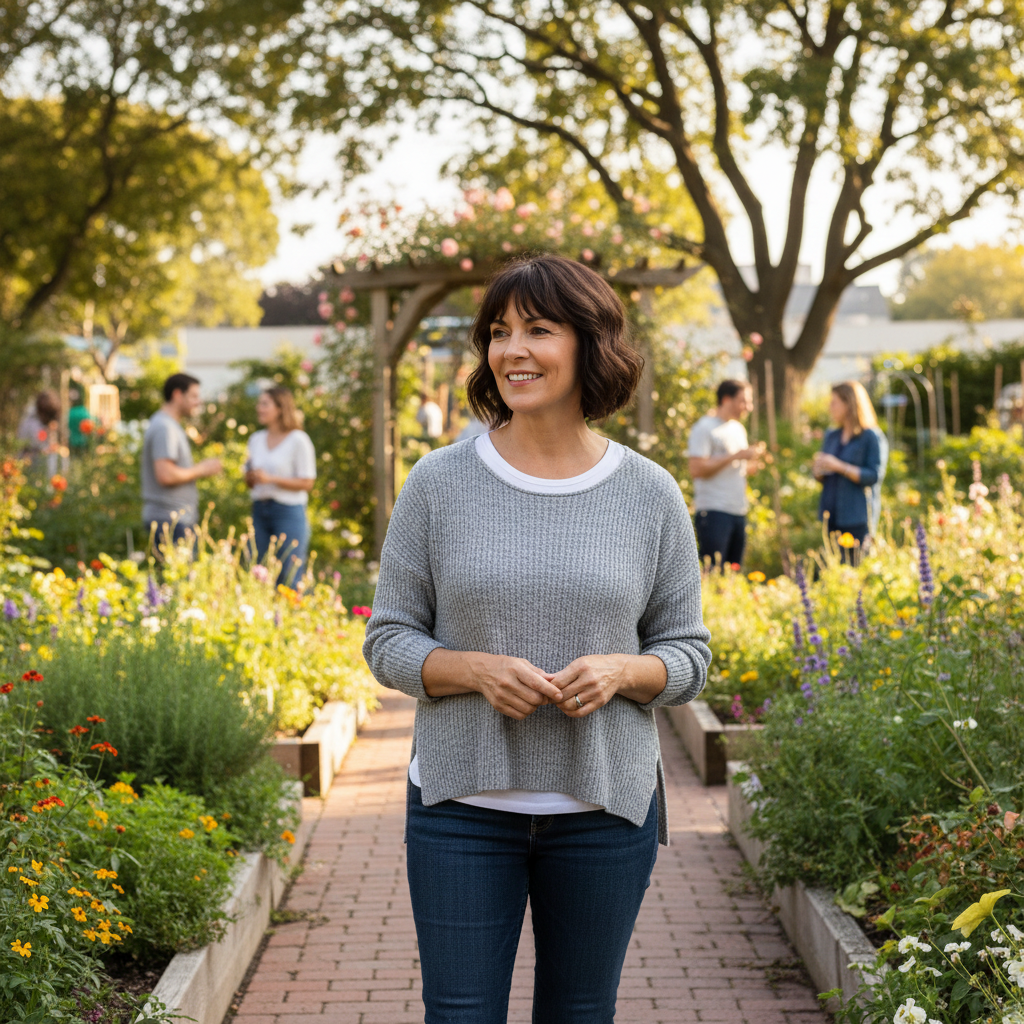
My kids know the difference now. They ask what's in the crate on Monday night. That's not something I expected a vegetable box to teach them.

I've been cooking for forty years. I forgot what a strawberry was supposed to taste like. These reminded me.